
Why Pittsburgh Homeowners Are Adding Elevators — and Why It's One of the Smartest Investments You Can Make
By MarVista Design+Build | Serving Pittsburgh and the Greater Allegheny County Area
There's a conversation happening in living rooms across Oakmont, Fox Chapel, and the North Hills that goes something like this:
"The stairs are getting harder. But we love this home. We've been here for 25 years. We don't want to leave."
We hear it constantly. And the good news is — you don't have to.
A home elevator retrofit is no longer a luxury reserved for grand estates. It's become one of the most practical, value-adding renovations a homeowner can make — especially for the generation that built this region's neighborhoods and isn't ready to give them up.
The Numbers Tell the Story
About 77% of baby boomers and adults over 50 prefer to age in place, choosing to remain in their own homes rather than relocating to assisted living facilities or nursing homes. That's not a small preference — it's an overwhelming one.
A 2025 survey of more than 2,500 adults 65 and older found that about 93% currently live in their own home or apartment. When asked what they'd want if they could no longer live independently, 60% said they'd prefer to stay home and receive care there.
And here in the Pittsburgh market, the financial case for staying put is even stronger. Townhomes in Oakmont are currently listing at a median price of $630,000. Moving means selling into a competitive market, paying transaction costs, giving up a familiar community, and starting over somewhere new. For most families, it simply doesn't pencil out — emotionally or financially.
The question isn't whether to stay. It's how to make staying possible.
The Staircase Problem Nobody Talks About Until It's Urgent
Most multi-level homes — townhomes especially — were designed for a version of life that didn't account for what happens at 72 or 78. Stairs and bathrooms are where 80% of home accidents happen. A fall on the stairs doesn't just cause injury — it can permanently alter someone's independence and trajectory.
We've seen it play out for families we work with. A knee replacement slows someone down. Vertigo makes the second floor feel risky. A spouse needs a mobility device. Suddenly, a home that was perfect for decades becomes a source of daily anxiety.
The solution doesn't have to be drastic. It just has to be planned.
What a Retrofit Elevator Actually Looks Like
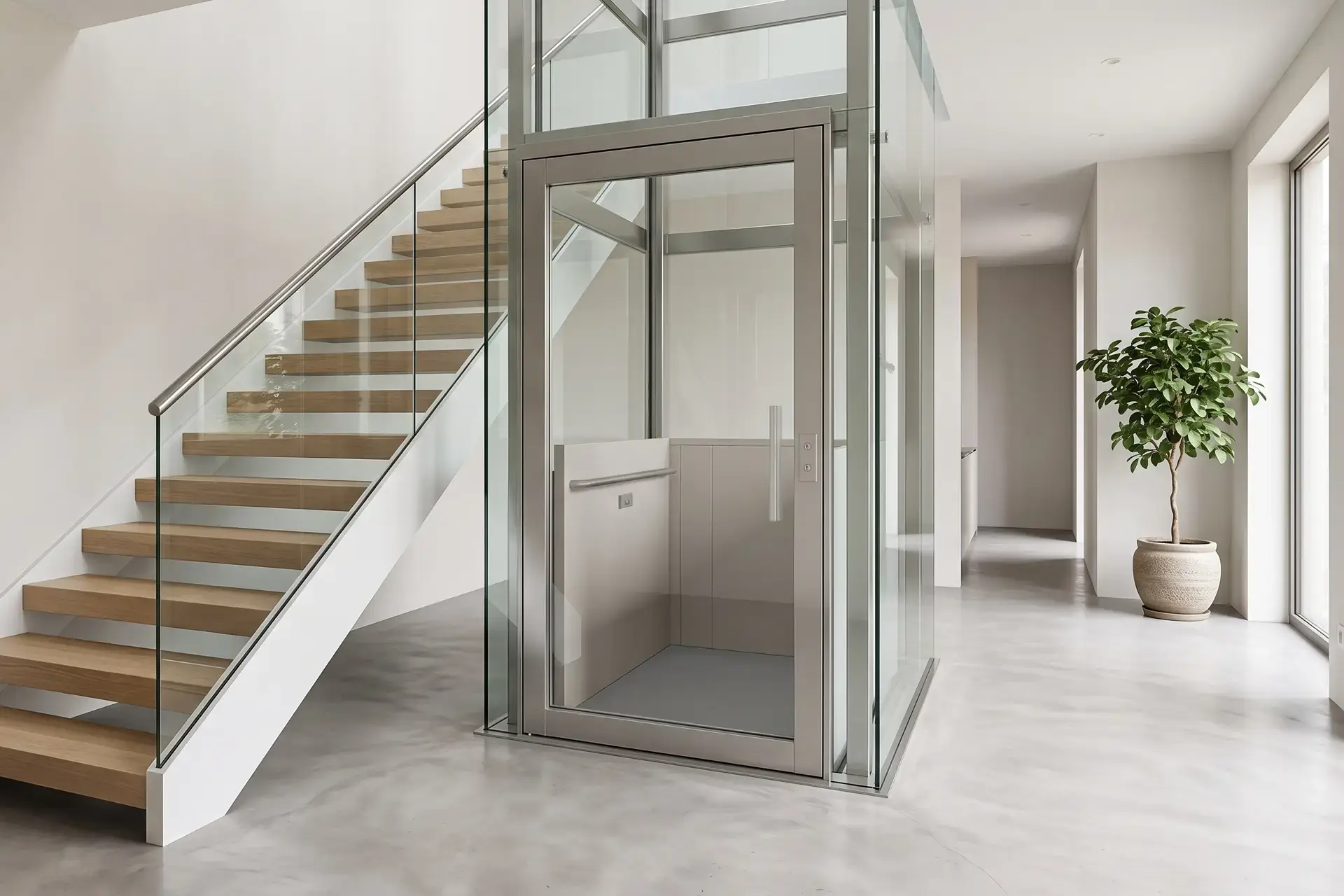
This is where MarVista comes in. We specialize in retrofitting existing homes — including multi-story townhomes — with residential elevators that blend seamlessly into the home's existing architecture. This is not a construction project that tears your home apart. With the right design-build approach, it's a precise, well-managed process.
Here's what a typical elevator retrofit involves with us:
Structural assessment. We evaluate your home's layout to identify the optimal elevator path — often through a closet stack, a corner of a room, or a purpose-built shaft that minimizes footprint.
Design integration. The elevator cab, doors, and finishes are matched to your home's existing aesthetic. A well-designed home elevator shouldn't look like a medical device — it should look like it was always there.
Permitting and engineering. We handle the full design-build process in-house, which means no gaps between your architect, engineer, and contractor. One team, one point of contact.
Installation and finishing. From shaft construction to final trim work, we manage every phase so your home returns to normal as quickly as possible.
Why Oakmont Townhome Owners Are Acting Now
We've been doing significant work in Oakmont — a community that exemplifies exactly this situation. About 24.4% of Oakmont's population is 65 or older, and the median age in the borough is 44 — a community with deep roots and a strong older-adult presence. The median construction year for homes in Oakmont is 1963, with about 30% of homes built before the 1940s — which means most of these homes were built long before anyone thought about vertical accessibility.
The townhomes along the Allegheny River corridor are beautiful, established, and deeply personal to the families who live in them. They're also typically three stories, with bedrooms on upper floors and garages below. As residents age, that vertical layout goes from charming to challenging.
Rather than relocate, the homeowners we work with are making a smarter move: investing in their existing home so it can serve them through every chapter of life.
An Investment That Pays in More Ways Than One
A home elevator removes the daily strain of climbing stairs, which can become hazardous as balance, strength, and mobility change with age. It also makes multi-level living more practical for carrying groceries, doing laundry, or accommodating visiting family members who may also have mobility challenges.
Beyond safety and comfort, there's a financial dimension worth noting. Seventy-five percent of American adults aged 50 and older say they wish to stay in their current homes as they age — which means accessibility features are increasingly a selling point, not a concession. A home with an elevator is a home that a larger pool of buyers can envision living in for decades. It's not just aging-in-place infrastructure — it's a market differentiator.
A 2026 industry survey found that 76% of remodelers saw increased demand for aging-in-place projects over the past five years. The market has recognized what Pittsburgh homeowners have always known: the best investment is often the home you're already in.
The Best Time to Plan Is Before You Need It
Here's the advice we give every client: don't wait until the stairs become a problem. Plan for the elevator when you're remodeling the kitchen, updating the primary suite, or doing any significant renovation. Adding an elevator to a planned scope of work is significantly more efficient — and less disruptive — than doing it as a standalone emergency project later.
By 2030, at least 20% of the U.S. population will be 65 or older. The families who plan ahead will stay in the homes they love. The ones who wait may find themselves with fewer options.
Let's Talk About Your Home
MarVista Design+Build has been helping Pittsburgh-area homeowners transform their homes into spaces that work for every stage of life. If you're in Oakmont, Fox Chapel, Sewickley, or anywhere in the greater Pittsburgh area and you're thinking about what the next 20 years look like in your home — we'd love to have that conversation.
Contact MarVista Design+Build at marvistadb.com to schedule a consultation.


